AI Chatbot Conversations Archive: 2026 Mastery Guide
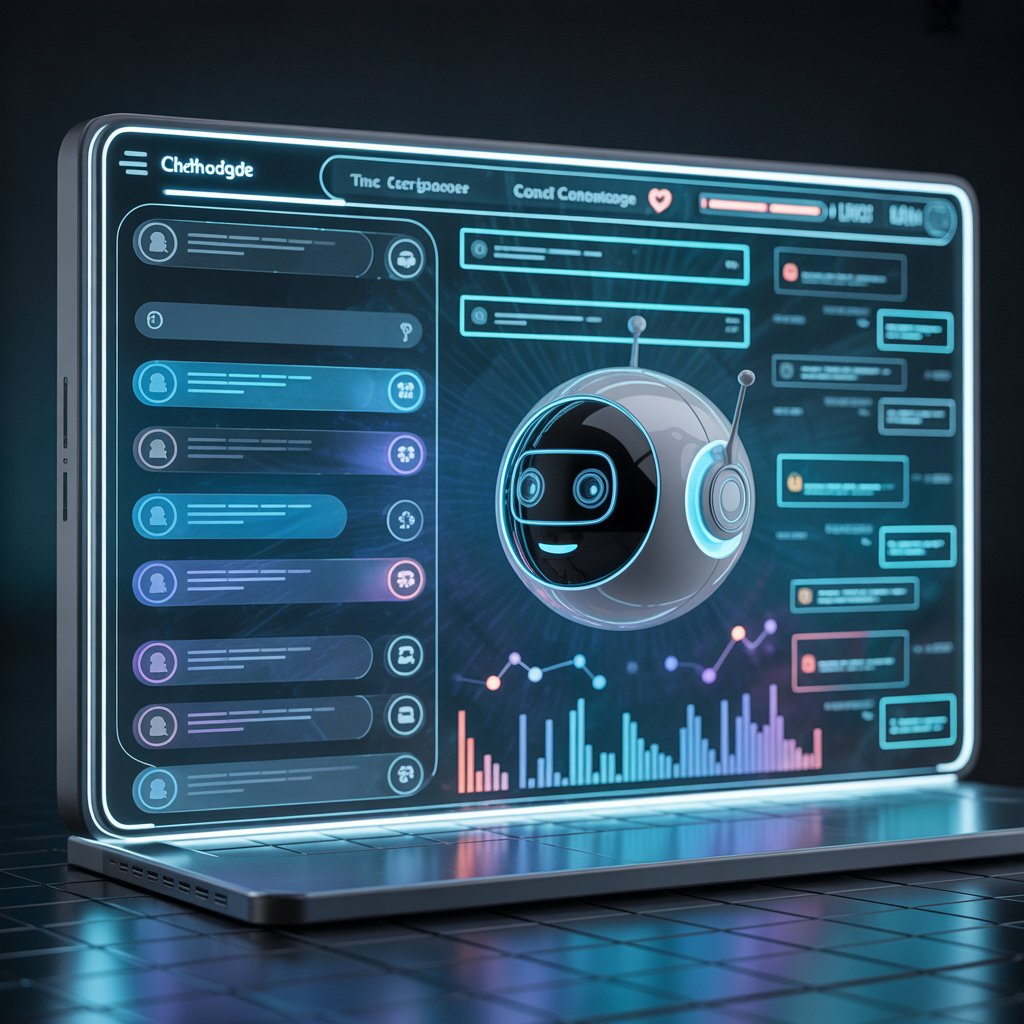
AI Chatbot Conversations Archive: The 2026 Technology Revolutionizing How We Preserve and Use AI Interactions
In 2026, your conversations with AI are no longer fleeting moments — they’re valuable digital assets. The AI chatbot conversations archive has emerged as one of the most practical innovations in modern AI systems, turning every exchange with tools like ChatGPT, Claude, Grok, or Gemini into a searchable, exportable, and actionable record.
Whether you’re a freelancer building a personal knowledge base, a developer debugging complex workflows, or a business leader meeting strict compliance rules, this technology solves a core problem: AI chats disappear into the void unless deliberately preserved. The AI chatbot conversations archive changes that forever.
It’s not just a simple save button. It’s a full-stack system combining cloud storage, intelligent search, metadata tracking, and forward-looking agentic memory. In this deep dive, we’ll explore exactly what it is, how it works today, who benefits most, and where it’s headed by 2027 and beyond.
What Is an AI Chatbot Conversations Archive?
An AI chatbot conversations archive is a structured, governed repository that captures every message, context, metadata, and outcome from your interactions with conversational AI.
Unlike old-school chat logs that were plain text files, today’s archives are rich datasets. They include:
- Full conversation threads with timestamps
- Model version, token usage, and latency metrics
- Tool calls (API integrations, function executions)
- Context windows and embeddings for future retrieval
- Privacy tags for PII redaction
Platforms like OpenAI’s ChatGPT introduced native archiving in 2024–2025, now fully mature in 2026. Third-party tools and enterprise platforms have taken it further, turning raw history into business intelligence or personal super-memory.
Think of it as the “photos app” for your AI life — everything is preserved, organized, and instantly findable.
How Does an AI Chatbot Conversations Archive Work? The Technical Mechanism
The magic happens through a layered, event-sourced architecture that balances speed, cost, and compliance.
Here’s the step-by-step flow most systems use in 2026:
- Capture Phase Every user message and AI response is logged in real time. Metadata (model used, tokens consumed, response time) is attached automatically. Tool calls — like when ChatGPT queries your calendar — are recorded with inputs and outputs.
- Storage Phase Recent chats live in “hot” storage (fast, searchable databases). Older conversations move to “cold” storage using efficient formats like Apache Parquet. This hybrid approach keeps active history lightning-fast while archiving years of data cheaply.
- Indexing & Enrichment Modern archives add vector embeddings (using models like those in Pinecone or Weaviate) so you can semantically search: “Show me all chats about tax planning” instead of exact keywords.
- Access & Management Layer Users interact via clean UIs — sidebar archives in ChatGPT, bulk exports in third-party tools, or dashboards in enterprise platforms.
- Retention & Compliance Engine Automated policies delete or anonymize data after set periods (e.g., 30 days for deleted chats, 24 months for EU AI Act traceability).
This isn’t passive logging. It’s active, intelligent infrastructure that powers everything from personal recall to enterprise analytics.
Pro tip from real usage: Enable “Chat history & training” in settings first — otherwise archives won’t build properly.
Core Features That Make 2026 Archives Powerful
- Native Platform Archiving — ChatGPT’s one-click “Archive” hides chats from the main sidebar but keeps them fully searchable.
- Cross-Platform Export Tools — Extensions like AI Exporter let you save conversations from ChatGPT, Claude, Gemini, Grok, and more into PDF, Markdown, JSON, or directly to Notion.
- Semantic Search — Ask natural-language questions across thousands of old chats.
- Bulk Actions — Archive or delete hundreds of conversations at once.
- Metadata Analytics — See token usage trends, response quality scores, or common failure patterns.
- Privacy Controls — Automatic PII redaction and consent-based retention.
- Migration Support — Export JSON and import memory into Claude or other models in seconds.
These features turn scattered chats into a unified, intelligent system.
Real-World Applications and Modern Use Cases
Personal Productivity
Freelance writers use archives to rebuild entire research threads months later. Students export semester-long study sessions as beautiful Markdown PDFs for revision.
One power user I know migrated 850MB of ChatGPT history to Claude using JSON export + vector chunking — now his new AI remembers everything from the old one.
Developer Workflows
Debugging complex agentic systems? Pull exact tool-call traces from the archive to reproduce bugs in seconds.
Business & Customer Service
E-commerce teams analyze thousands of chatbot interactions to spot phrasing that confuses customers (“automatic invoice reminders” instead of “auto-billing”). They retrain models and update FAQs, cutting support tickets dramatically.
Compliance-Heavy Industries
Finance and healthcare firms keep 24-month archives for EU AI Act audits. Every response is traceable, bias-checked, and ready for regulators.
Creative & Knowledge Work
Content creators build personal wikis from years of AI brainstorming. Researchers treat archives as living datasets for literature reviews.
Key Benefits: Why the AI Chatbot Conversations Archive Matters in 2026
- Never Lose Context Again — Your AI becomes a true long-term collaborator.
- Boost Productivity — Instant recall saves hours of re-asking the same questions.
- Data-Driven Improvement — Businesses turn conversations into training data that makes chatbots smarter.
- Compliance Made Simple — Meet EU AI Act, HIPAA, or SEC rules without custom engineering.
- Seamless Migration — Switch from ChatGPT to Claude or Grok without losing your history.
- Mental Offloading — Stop worrying “did I ask this before?” — just search the archive.
Compared to older solutions (screenshots, manual copy-paste, or forgotten browser tabs), this is like upgrading from floppy disks to cloud-native intelligence.
Limitations and Honest Drawbacks
No technology is perfect. Current challenges include:
- Platform Lock-In — Native archives (ChatGPT) don’t easily transfer without third-party tools.
- Storage Costs at Scale — Enterprises with millions of chats need careful hot/cold tiering.
- Privacy Risks — Even with encryption, sharing export files requires caution.
- Search Accuracy — Vector search is powerful but can still surface irrelevant results if embeddings are poor.
- Deletion Finality — Once permanently deleted (after 30 days), chats are gone forever.
- Learning Curve — Bulk management and compliance settings aren’t intuitive for casual users.
These are being actively addressed — 2026 updates already improved cross-platform support dramatically.
Comparison Table: AI Chatbot Conversations Archive Solutions in 2026
| Feature | ChatGPT Native Archive | AI Exporter Extension | Enterprise Platforms (e.g., PromptLayer-style) | Old-School Manual Export |
|---|---|---|---|---|
| One-Click Archive | Yes | Yes | Yes | No |
| Semantic Search | Yes (improved 2026) | Partial | Advanced | No |
| Multi-Platform Support | No | Yes (10+ AIs) | Yes | No |
| Export Formats | JSON/HTML | PDF, MD, JSON, Notion | Parquet + full telemetry | TXT/Screenshots |
| Compliance Tools | Basic | None | Full (EU AI Act ready) | None |
| Best For | Individuals | Power users | Businesses | Beginners |
| Cost | Free | Free | $10–100+/mo | Free |
Future Potential: Agentic Memory and Beyond
By late 2026 and into 2027, the AI chatbot conversations archive evolves into “agentic memory” — active, evolving systems that don’t just store chats but use them intelligently.
Expect:
- Automatic summarization and knowledge graph creation from your entire history.
- Real-time cross-AI synchronization (your Grok archive feeds Claude automatically).
- Vector + graph hybrid search for instant, context-aware recall.
- Privacy-first zero-retention modes for sensitive users.
- Integration with wearable/biometric data for “energy-aware” conversation context.
The LMSYS-Chat-1M dataset already showed us the scale — millions of conversations archived globally. Soon, every AI agent will have its own lifelong memory built on robust archives.
This isn’t sci-fi. It’s the logical next step from today’s tools.
FAQ: Your Questions About AI Chatbot Conversations Archive Answered
What is AI chatbot conversations archive in technology? It’s the modern system for storing, organizing, and searching every interaction with AI chatbots like ChatGPT or Claude — including messages, metadata, and context — turning temporary chats into permanent, useful digital assets.
How does AI chatbot conversations archive work? Chats are captured in real time, stored in hot/cold layers, enriched with embeddings for semantic search, and managed via retention policies. Native tools (ChatGPT) use simple sidebar archiving; advanced systems add vector search and analytics.
Is AI chatbot conversations archive safe and reliable? Yes — when using official platforms with end-to-end encryption and user-controlled deletion. Deleted chats are purged after 30 days. Always review privacy settings and avoid sharing sensitive exports.
Who should use AI chatbot conversations archive? Anyone who chats with AI regularly: students, professionals, developers, customer support teams, and regulated businesses. It’s especially valuable for power users building personal knowledge bases or companies needing compliance.
What are the latest updates or future developments? 2026 brought native archiving to more platforms, better vector search, and easy migration tools. Coming soon: full agentic memory systems that actively use archives for smarter, continuous AI learning.
How do I start archiving my chats today? In ChatGPT: hover over a chat, click ⋯, select Archive. For bulk or cross-platform: install AI Exporter or use Settings > Data controls > Export Data. Enable history in settings first.
Common misconception? Many think archiving deletes chats or that “deleted” chats can be recovered. Archiving only hides them (still searchable); true deletion is permanent after 30 days.
Conclusion: Make the AI Chatbot Conversations Archive Your 2026 Superpower
The AI chatbot conversations archive isn’t just a nice-to-have feature anymore — it’s becoming core infrastructure for anyone serious about AI. It solves real problems: lost context, compliance headaches, scattered knowledge, and missed insights.
By preserving your AI history intelligently, you unlock higher productivity, smarter chatbots, smoother migrations, and future-ready agentic systems. Whether you’re using ChatGPT’s built-in tools, a powerful exporter extension, or enterprise-grade platforms, the technology is ready today and exploding in capability tomorrow.
Start small: archive your last 10 important chats, export one conversation to Notion, or set up a weekly review habit. You’ll quickly see why this quiet innovation is one of the most practical advances in the AI era.
The conversations you have with AI today are the knowledge base of tomorrow. Don’t let them vanish — build your AI chatbot conversations archive now and step confidently into the future of intelligent, memory-powered computing.
What’s your biggest chat archive challenge right now? Share in the comments — let’s discuss the best workflows for 2026 and beyond.


Post Comment